
Preparing for a puppy
New Puppy Checklist: What to Prepare Before the First Week
Prepare the supplies, the space and the people. Give your first week a practical starting point.
- Essential supplies
- Caregiver coverage
- A smaller first-day plan
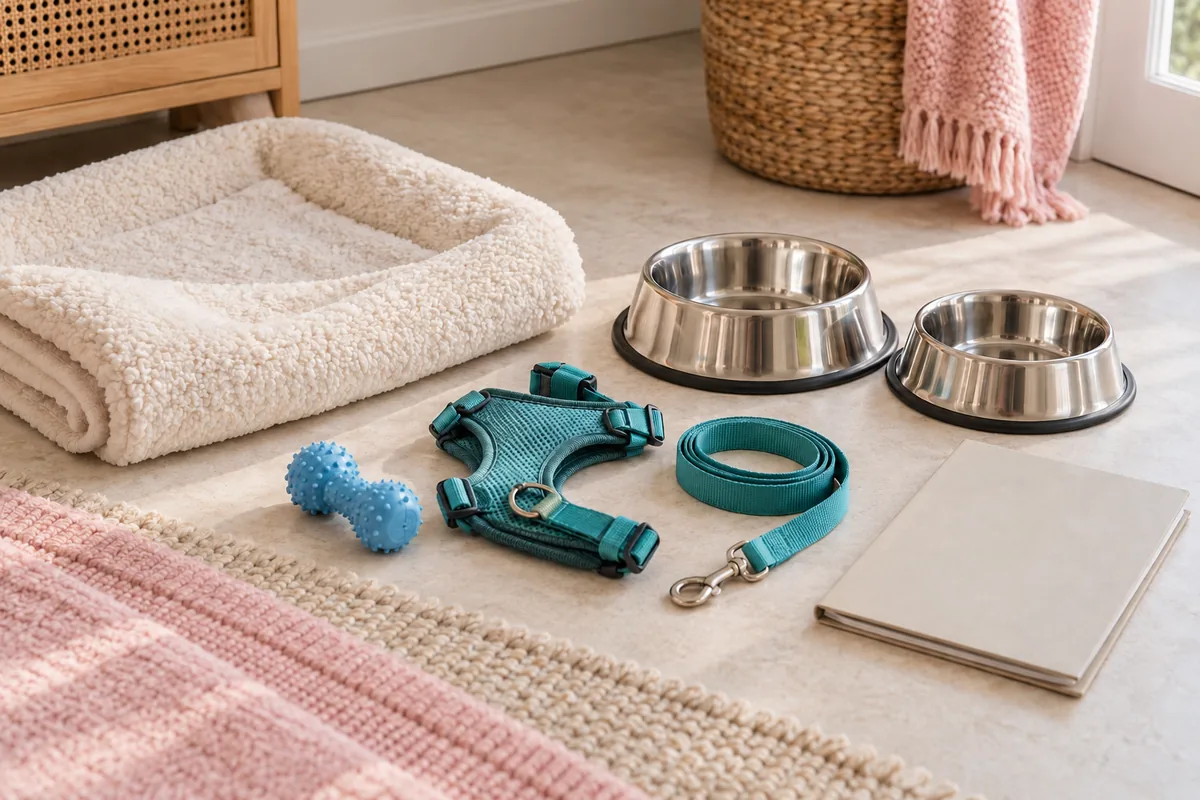
A new puppy checklist should help you prepare for real life with your puppy, not persuade you to buy every item in the pet aisle. Before the first week, focus on a suitable home setup, the care information you need, and the people who will cover the day.
A bed is useful. Knowing where it will go is useful too. A food bowl helps, but someone still needs to know what food the puppy already eats and where the feeding instructions are written. This guide puts the objects and the practical decisions together so your shopping list becomes a workable plan.
What to prepare before your puppy comes home
Start by walking through your home as it will be used on an ordinary day. Where will your puppy rest? Which areas can you supervise comfortably? Where are cleaning materials stored? Where will you put the information someone else needs if you are occupied?
The RSPCA's puppy-care guidance recommends preparing a quiet rest area, removing hazards, and arranging veterinary care. Use that foundation, then make a household-specific list. This article helps organize preparation; your vet's advice and the puppy's individual needs should determine their care.
Give each checklist item a decision and an owner. “Choose the rest area — Alex” is clearer than “bed.” “Request the feeding information — Sam” is clearer than “food.” A check mark should mean the necessary action is complete, rather than that someone remembers seeing the item online.
Separate what must be ready for arrival from what you can decide later. A suitable place to rest and a care arrangement belong in the first group. A coordinated storage basket can wait. This keeps the first week from becoming a home makeover with a puppy somewhere in the middle.
A puppy essentials checklist organized by purpose
| Purpose | Prepare | Decision to record |
|---|---|---|
| Rest | Suitable bed or resting space | Where it goes and who protects quiet time |
| Food and water | Suitable bowls and the established food | Current instructions and where supplies are kept |
| Outings | Appropriate secure equipment | Fit check and individual outing guidance |
| Play | A small selection of suitable puppy toys | What is supervised and when damaged toys are removed |
| Cleanup | Appropriate cleaning supplies | Safe storage and who replenishes them |
| Care information | Records and contacts | One accessible place for the household |
Choose supplies for the puppy you are bringing home rather than the adult dog you imagine in a year. Check fit, suitability, and condition. If you are unsure about equipment or handling, ask an appropriate professional before relying on it. The cheapest or most popular option is not automatically the right one.
Keep the initial toy selection manageable. You want to learn what your puppy enjoys, what you can supervise, and what survives their normal use. A large pile makes those details harder to notice and creates more items to inspect and put away.
Prepare a home setup you can actually manage
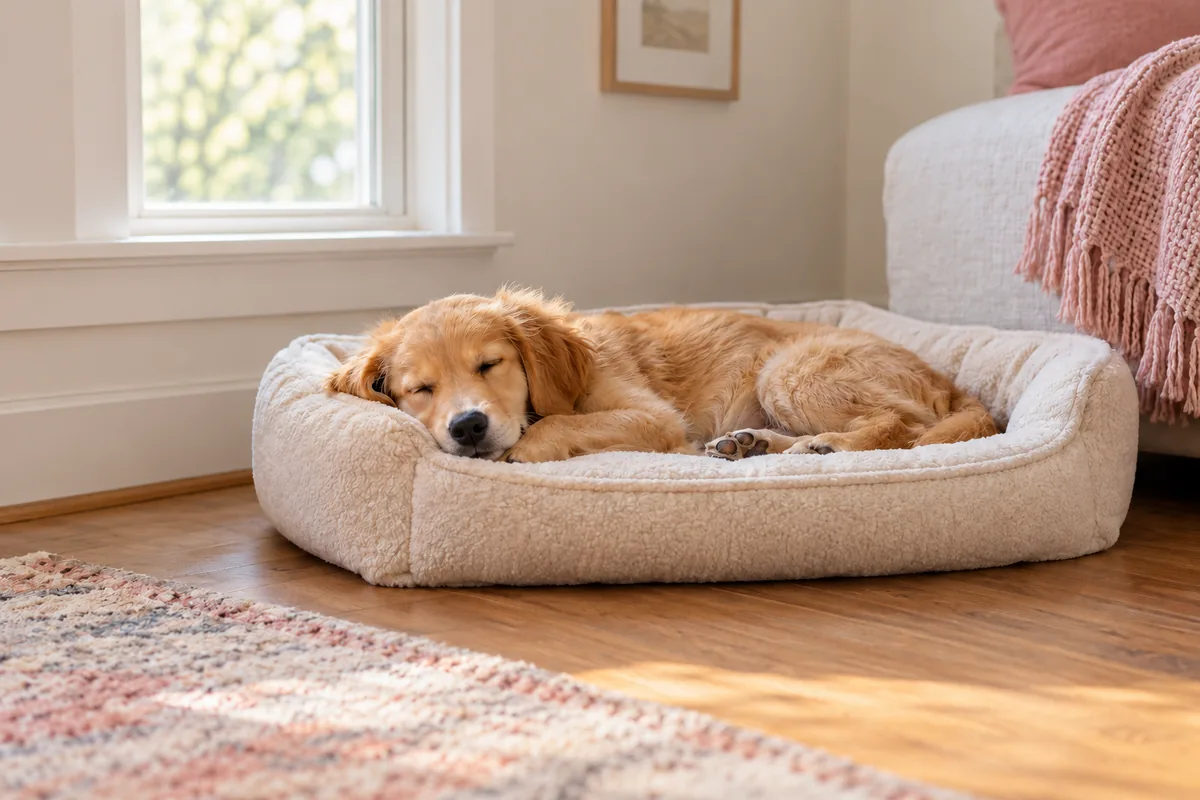
Give your puppy an accessible resting area where household activity will not constantly interrupt them. Explain its purpose to everyone who lives with you. A quiet space works better when people understand that a resting puppy does not need to be woken for a visit or a photograph.
Look for practical hazards in the areas your puppy will use: loose cables, reachable cleaning products, small objects, and items you do not want chewed. Make a room-by-room list and check it before arrival. Put the responsibility on changing the environment rather than expecting a puppy to understand every household object.
Think about movement through the home. If one person is cooking while another is supervising the puppy, where can each task happen comfortably? If a delivery arrives, who stays with the puppy? These small arrangements are easier to agree before everyone is tired.
Keep the setup flexible. The first location you choose may turn out to be too busy, too inconvenient, or difficult to supervise. Moving a basket or changing a household habit is a normal adjustment. Your checklist should make those changes visible instead of making the original plan feel permanent.
Gather the care information before you need it
Ask the puppy's previous caregiver for the records and current instructions that should accompany them. Store the documents together, and write down where the originals are kept. Save the contact details you may need to clarify information after arrival.
Your preparation page can include the puppy's name, known age or date of birth, existing identification information, current food details, and the appointments already arranged. Record what you have been told accurately. If something is missing or unclear, write a question rather than filling the gap with a guess.
Choose a veterinarian and save both the practice's normal contact details and its instructions for urgent help outside normal hours. Confirm the appropriate care and outing plan with them. A generic checklist cannot decide vaccination timing, treatment, feeding amounts, or safe exercise for a particular puppy.
Keep questions in a short list you can bring to the first visit. For example: what records are still needed, what should the household know about the current care plan, and which changes should prompt a call? You are preparing a conversation, not diagnosing something from your notes.
Put human care coverage on the checklist

Before the puppy arrives, map the times people are available and the times they are not. Work, school, travel, and appointments still happen during the first week. Naming the gaps gives you a chance to arrange help instead of discovering the problem at the door.
Write a person's name beside each handoff. “Someone is home around lunch” is a hope; “Maya covers the midday check-in and updates the tracker” is a plan. Confirm that the person understands the arrangement and knows where the puppy's care information is kept.
If you are handling care alone, create the same list with your backup contacts. Solo ownership does not mean every unexpected work call or delayed journey has to be solved without support. Find out who could help, when they are actually available, and what they would need to know.
Do not treat a workday timetable as evidence that a puppy can be left alone for that period. The routine described here organizes people and notes. Ask qualified professionals about the puppy's individual care needs, and arrange coverage before relying on an absence plan.
Agree on a few household decisions
Choose a small number of decisions that affect daily care. Where are the supplies? Who updates the notes? Which familiar words will you use? Who checks that a task has already been done before repeating it? Put the answers somewhere everyone can find.
Dogs Trust highlights consistency between family members when building puppy habits. For your preparation list, turn that into a practical conversation: agree on the approach before each person improvises their own version.
Keep the written instructions short enough to use. A page that says where things are, what is already done, and who is responsible next may be more helpful during a busy morning than a long document nobody opens. Add details when there is a real need for them.
For children and visitors, explain how the household will supervise interactions and protect the puppy's quiet space. Do not delegate care beyond someone's ability or assume enthusiasm equals readiness. A named adult should know who is supervising each part of the day.
Make the arrival-day plan smaller than the first-week plan
The first day does not need to contain every activity on your wish list. Prepare the essentials, the care instructions, and the people involved. Leave room to notice how the puppy responds to the new setting rather than filling every gap with a visitor or a photograph.
Use an arrival note with four entries: who is collecting the puppy, what information must come home with them, who is available afterward, and what has already been prepared. Check it with the household before the collection trip begins.
When you get home, follow the individual care advice you have received and keep your own observations simple. Note where the puppy rested, which supplies were easy to find, and whether a handoff needed clarification. Those details tell you what to improve tomorrow.
Invite fewer extra decisions into the day. If the supplies are ready, you do not need to compare five more bowls online. If your care contact list is complete, put it where you can reach it. Finishing preparation should create room to be present with your puppy.
Turn the checklist into a first-week routine
Once the preparation items are ready, organize the day around a few household anchors. Start together, make the next task visible, check coverage, reset the notes after activity or a caregiver change, and leave tomorrow a small head start.
These are organizational prompts, not the only five times your puppy receives care. Their immediate needs and professional guidance come first. You may revisit the same prompt several times in one day, especially when caregivers change.
Our guide to a flexible puppy routine explains those anchors with a worked household example. You can also use the free Puppy Routine Quiz to make a starting point around your wake time, availability, caregivers, and the part of dog life you want to simplify.
The quiz's six-page pack includes the personalized routine and focus points, a daily tracker, a handoff sheet, a setup checklist, care notes, and weekly wins. After subscribing and confirming your email, use the delivery link to download your pack. Keep the personalized result in the browser where you completed the quiz.
Review what helped at the end of the week
A checklist becomes useful when it changes with real experience. Ask which item saved time, which instruction was unclear, and which supply was never needed. Remove unnecessary work before adding another page to track.
For example, your original note might say “toys in the cupboard.” After a few handoffs, you may change it to “intact toys in the left basket; damaged items in the closed disposal box.” That is a practical improvement because the next person can act on it.
Keep one small success on the page as well. Perhaps everyone used the same tracker, the care contacts were easy to find, or a backup caregiver knew what to do. Preparation is not only about catching mistakes. It can also show you what already works.
New puppy checklist questions
What should I buy before bringing a puppy home?
Start with suitable rest, feeding, cleanup, play, and outing supplies, chosen for the individual puppy. Pair each purchase with a decision about where it goes and who uses it. Avoid treating this guide as a universal product list.
Do I need every accessory immediately?
No. Prioritize the supplies and arrangements required for appropriate daily care. Extras can wait until you understand your puppy and household better. A clear care plan deserves a place beside the shopping list.
Is the free puppy pack just a checklist?
No. It contains six pages, including your personalized routine and five supporting printables. The setup checklist is one part of that pack.
Can the routine tell me how long my puppy can be alone?
No. It prompts you to arrange care coverage. It does not determine safe time alone or replace individual veterinary or training advice.
Sources and further reading
For general preparation and care, read RSPCA: caring for your puppy. For household consistency, see Dogs Trust: teaching your puppy good habits. The checklists, examples, and organizational system in this article are Woof Mom's editorial suggestions.
Illustrative images generated for this guide.